Effective Ways to Organize Extension Cords (Without Damaging Them)
We’ve all been there. You need to hang the holiday lights or fire up the leaf blower, but first you have to battle a tangled bird’s nest of extension cords in the garage. Five minutes later, you’re still wrestling knots, and the cord refuses to lie flat.
But tangled cords aren’t just annoying — they’re a sign of improper storage. At Cord-Tie, we work with electricians, AV crews, and contractors who manage cords every day, and we see the same issue over and over: cords fail early not from use, but from how they’re wrapped and stored.
Learning how to organize extension cords properly — starting with a 30-second professional wrapping method — can prevent tangles, extend cord life, and reduce safety risks.
Why Your Wrapping Method Is Secretly Ruining Your Extension Cords
Most people wrap extension cords tightly around their arm or elbow to keep them neat. It seems harmless, but this habit is one of the fastest ways to damage a cord from the inside out.
Inside the outer jacket are dozens of fine copper strands. Every sharp bend, twist, or stretch during coiling puts stress on those wires. Over time, that repeated stress weakens them — much like bending a paperclip back and forth until it snaps.
The result is internal wire damage you can’t see. Electricity struggles to pass through those weak points, which can cause overheating, inconsistent power, or sudden failure. This is also why a cord that looks fine on the outside can stop working without warning.
The #1 Extension Cord Wrapping Mistake That Causes Tangles
The most common mistake is wrapping the cord in the same direction over and over again, usually around your arm. This forces repeated twists into the cable, creating what professionals call cord memory.
Cord memory is why cords spring back into coils, refuse to lie flat, and immediately tangle when unrolled. When you pull the cord out later, all those built-up twists release at once — usually into a knot.
The good news? There’s a better method that professionals use every day.
The No-Tangle Coil: How Pros Wrap Extension Cords in 30 Seconds
The best way to wrap an extension cord is a simple “over-under” technique that actively cancels out twists as you coil. It may feel slightly awkward at first, but once learned, it’s faster than traditional wrapping and eliminates tangles completely.
How to do it:
- Hold the plug end of the cord in one hand.
- Make the first loop normally, coiling toward your body.
- For the next loop, flip your hand so your thumb points down and bring the cord from underneath to create a reverse loop.
- Continue alternating: one normal loop, one reverse loop.
Each reverse loop cancels the twist from the previous loop, preventing cord memory from forming. When you’re ready to use the cord, simply hold one end and toss it — it will unroll smoothly and lie flat.
This technique is widely used by electricians, stage crews, and AV professionals because it protects the internal wires and saves time on every setup.
Why Proper Storage Matters After Wrapping
Once a cord is wrapped correctly, the next step is keeping it secured without undoing all that work. Loose coils unravel, while tight ties can reintroduce sharp bends and pressure points.
This is where professional cord organization differs from most DIY solutions. Instead of disposable or removable fasteners, many professionals use permanently attached cord ties that secure the coil without crushing or twisting the cable.
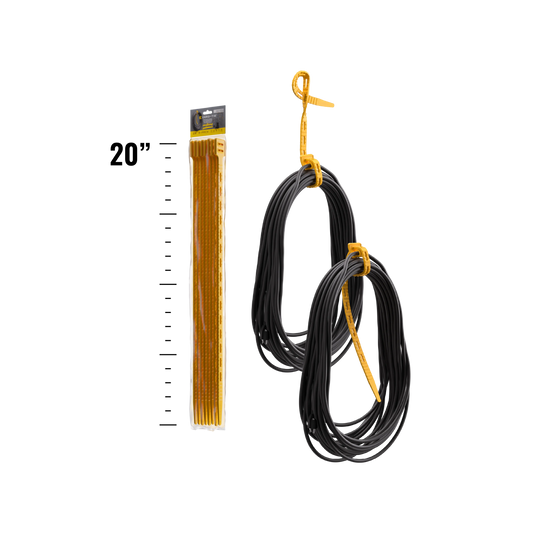
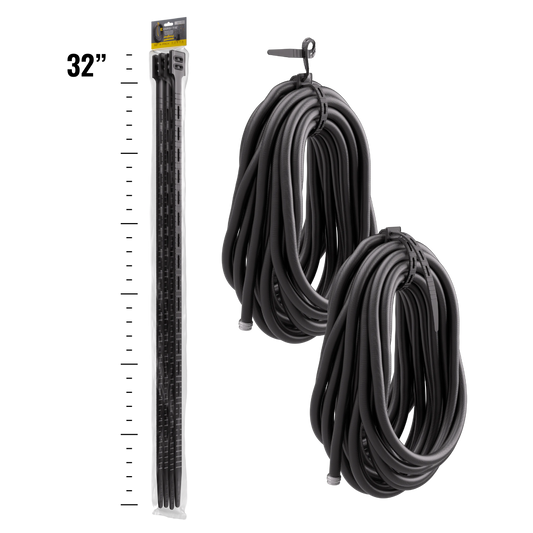
Reusable cable organizers like Cord-Tie are designed to stay attached to the cord at all times, so there’s nothing to lose, forget, or replace. Because they don’t rely on adhesive or hooks, they also avoid damaging the cord jacket over time.

3 Simple DIY Extension Cord Storage Ideas
If you’re organizing cords on a budget, these DIY solutions can work — especially when paired with proper wrapping.
Toilet Paper Roll
Small indoor cords can be coiled and slipped into an empty cardboard roll to keep drawers tidy.
Bungee Cord or Strap
Medium-length outdoor cords can be bundled with a bungee and hung on a peg or nail. Just avoid overtightening, which can stress the cable.
5-Gallon Bucket
Long, heavy-duty cords can be coiled directly into a bucket for storage and transport. This keeps them contained but doesn’t prevent unraveling on its own.
These methods work best when the cord is already wrapped using the no-tangle method and secured with a gentle tie.
Cord Reels vs. Wall Hangers: Which Is Better?
Dedicated organizers are helpful if you store cords often or use long runs.
Cord reels are ideal for frequently used 50- to 100-foot cords, especially in workshops or outdoor settings. They allow fast deployment and storage but can still introduce twists if used improperly.
Wall hangers and hooks are better for most household cords. Large J-hooks or pegboard mounts keep cords off the floor and visible.
One thing to watch out for: many storage systems still rely on Velcro straps or removable ties, which wear out, collect debris, or disappear. Permanently attached cord ties eliminate that failure point and make any storage method more reliable.
How to Store Extension Cords Outdoors Safely
Leaving cords outdoors shortens their lifespan significantly. UV exposure from sunlight breaks down the plastic jacket, making it brittle and prone to cracking. Moisture causes plug prongs to rust, leading to poor connections and potential electrical hazards.
If you must store cords outside:
- Coil them properly
- Secure them with a non-abrasive tie
- Place them in a waterproof, solid-colored storage bin
- Keep the bin in a shaded location
This protects both the jacket and the internal wiring.
Why Professionals Choose Cord-Tie for Extension Cord Organization
Professionals who handle cords daily prioritize durability, consistency, and speed. That’s why many choose Cord-Tie for extension cord storage.
Cord-Tie advantages include:
- Permanently attached — never lost
- No adhesives or sharp edges
- Even pressure that protects cord jackets
- Works indoors, outdoors, and on job sites
- Compatible with proper no-tangle wrapping
When paired with the over-under wrapping method, Cord-Tie helps keep cords organized, protected, and ready to deploy without frustration.
Your 3-Step System for Tangle-Free Extension Cords
Organizing extension cords doesn’t require expensive gear — just the right technique and habits.
- Wrap correctly using the no-tangle over-under method
- Secure gently with a reusable, non-damaging tie like Cord-Tie
- Store smart in a dry, shaded space
Follow these steps consistently, and tangled cords become a thing of the past. You’ll save time, extend the life of your cords, and reduce safety risks — every single time you unplug.