The Hook and Loop Hassle: Why the One-Time Miracle Might Be Letting You Down
Since its invention in the 1940s, hook-and-loop fasteners (commonly known by the brand names like Velcro™) have revolutionized everything from NASA space suits to toddler sneakers. It’s an engineering marvel based on biomimicry, but for many heavy-duty users—including construction professionals, outdoor enthusiasts, and DIYers—the honeymoon phase with hook-and-loop is over.
While convenient, hook-and-loop straps have several inherent flaws that can lead to equipment failure, safety risks, and lost time. If you’ve ever wondered why your fastener isn't performing like it used to, the culprit might be the very thing that made it work well at first: the fuzzy strips.
1. The "Silent" Killer: Debris Accumulation
The primary problem with hook-and-loop is that it acts as a magnet for everything it isn't supposed to stick to. The "hook" side (the rough part) is essentially a microscopic comb that traps dirt, dust, fuzz, lint, and thread.
Once these hooks are clogged with debris, they lose their ability to engage with the "loop" side. This leads to fastener failure, where a pocket or strap pops open at the slightest tension. For outdoor enthusiasts, a clogged hook-and-loop flap on a pocket or a pack can mean losing essential gear in the brush. For someone on the job, a worn-out strap can mean lost time.
2. Mechanical Fatigue and "The Fuzz"
Unlike zippers or snaps, hook-and-loop has a finite lifespan. Every time you pull the two sides apart, a tiny amount of damage occurs.
Loop Degradation: The soft loops eventually get torn or stretched out, leading to a "fuzzy" appearance and a significantly weaker bond.
Hook Straightening: On the flip side, the rigid hooks can eventually lose their shape or break off entirely.
This mechanical fatigue makes hook-and-loop a poor choice for high-cycle items—things you need to open and close dozens of times a day.
3. Collateral Damage to Your Schedule
When hook-and-loop straps are still sticking, they often stick to the wrong thing. That can mean an unplanned task of separating straps when you’re hustling to finish a job. And when the hook-and-loop is worn out, it may mean reverting to other methods to bundle cords and hoses.
Optimizing Your Set Up: The Alternative to Hook-and-Loop
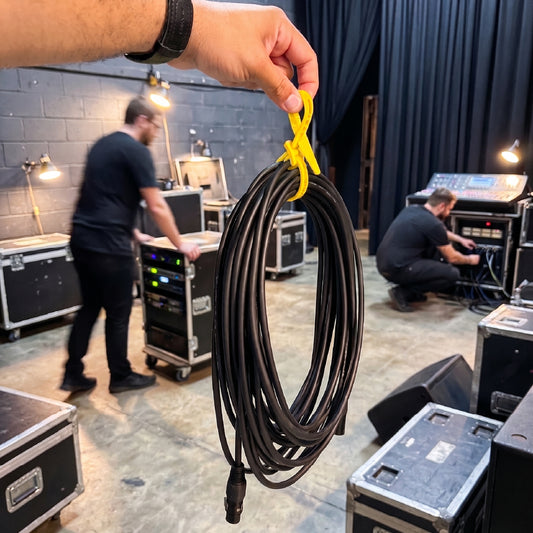
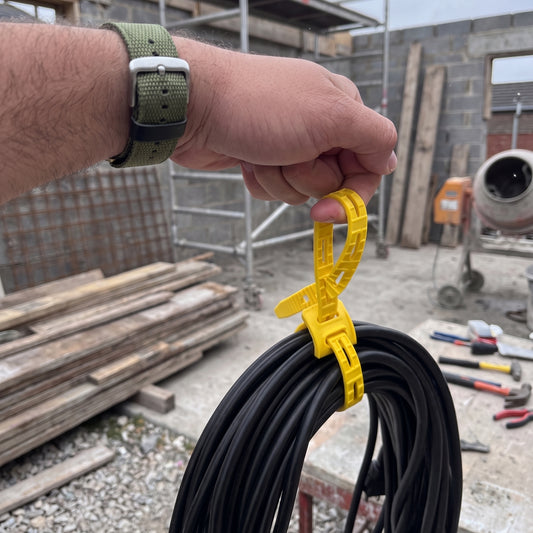
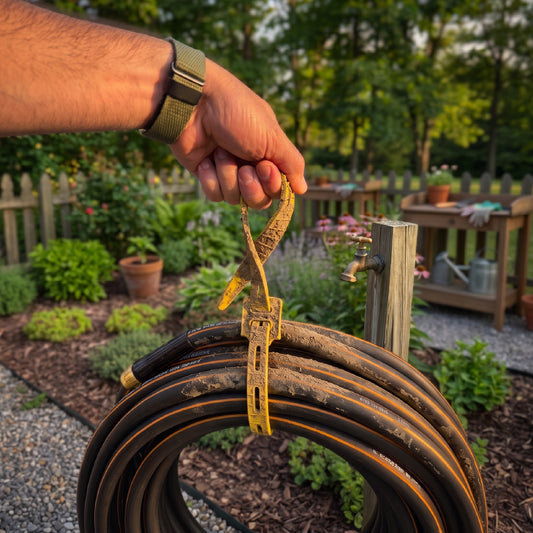
If you’re tired of the "hook and loop hassle," consider this alternative for your next purchase: Cord-Tie. With its patented design, Cord-Tie is built from industrial-grade polymer. It holds up to dirt, dust, fuzz, mud, weather, and UV exposure. From the job site to the campsite, from the stage to the shop floor, Cord-Tie secures your gear when the going gets dirty. Every Cord-Tie has a built-in method to hang cables, cords, and hoses. Tested to more than 1,000 open-and-close cycles, Cord-Tie can be trusted in the toughest conditions requiring repeat use.
Conclusion
Hook-and-loop is a masterpiece of design, but it isn't a "set it and forget it" solution. From its tendency to break down in outdoor use to its inevitable loss of grip, it’s a fastener that requires maintenance and eventual replacement. By understanding these limitations, you can make better choices for your gear and ensure your equipment stays secure when it matters most.