The Case Against the Classics: Why Zip Ties and Hook-and-Loop Aren't Always the Answer
If you ask any audio-visual technician, IT professional, or event production staffer what their go-to cable management tools are, you will almost certainly hear two answers: zip ties and hook-and-loop straps (commonly known by the brand name Velcro). They are cheap, ubiquitous, and undeniable industry standards.
But what if the industry standards are secretly sabotaging your setups?
While both tools have their place in a pinch, relying on them as your ultimate cable management solutions can lead to damaged gear, gross aesthetics, and massive headaches. Here is a candid look at why it might be time to rethink these classic fasteners.
The Danger of Zip Ties: The Plastic Chokehold
Zip ties (or cable ties) are fantastic for securing a sign, but they are often terrible for sensitive AV and data cables. And they’re not reusable.
- The Pinch Effect: Zip ties are designed to pull tight and lock permanently. When over-tightened on copper data cables (like Cat6) or fragile fiber optic lines, they crush the internal geometry of the cable. This creates a "pinch point" that can degrade signal integrity, cause packet loss, or sever optical glass entirely.
- The Snipping Hazard: Because zip ties are single-use, they must be cut off during teardowns or system upgrades. Slipping a pair of flush cutters or a knife into a tight bundle of expensive SDI or XLR cables is a game of Russian Roulette. It only takes one slip of the blade to nick a cable jacket and ruin a $50 cord.
- The Blood Sacrifice: If a zip tie isn't cut perfectly flush, it leaves behind a microscopic, razor-sharp plastic edge. Anyone who has ever reached their arm blindly into a server rack or behind a road case knows the pain of being sliced open by a hastily cut zip tie.
- The Brittle Truth: Zip ties are notorious for breaking down under sunny, dry, or cold conditions. One AV tech said, “in our environment, we have to hurry to use the box before they get brittle.”
The Flaws of Hook-and-Loop: The Fuzz Magnet
Many professionals ditch zip ties for reusable hook-and-loop straps. While they solve the "snipping hazard," they introduce a whole new set of frustrating problems, especially in live production environments.
- The Lint Trap: The "hook" side of the strap is essentially a magnet for debris. If a cable touches the ground—which it inevitably will—the strap will pick up carpet fuzz, pet hair, dirt, and stray threads. After a few months of gigging, your sleek black cable ties will look like gross, fuzzy gray caterpillars. Not to mention that all that fuzz and dust will clog the hook-and-loop fibers so they don’t stick together anymore.
- The Snag Factor: That same gripping power loves to grab onto things it shouldn't. Hook-and-loop ties constantly snag on delicate fabrics, curtains, gig bags, and even the internal braiding of other cables. When pulling a long cable through a tight conduit or a drop ceiling, those straps act like tiny brakes, catching on every lip and edge.
- Unnecessary Bulk: If you are trying to loom several cables together tightly, wrapping them in thick strips of hook-and-loop adds significant bulk to the diameter of your run. In permanent, clean installations, this looks lumpy and unprofessional compared to a sleek, uniform bundle.
Is There a Better Way?
If zip ties choke your cables and hook-and-loop straps turn into gross lint traps, what should you use?
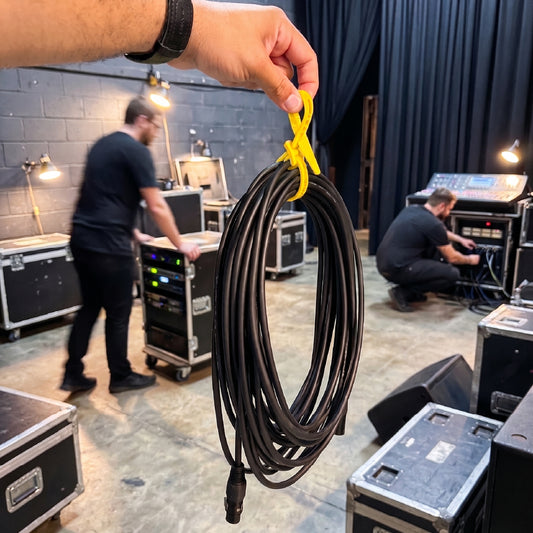
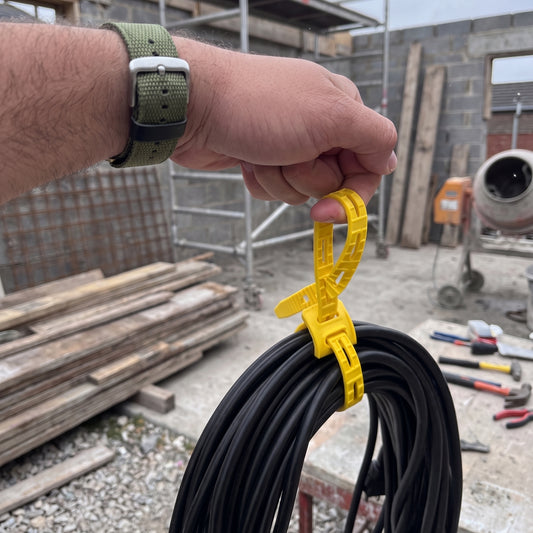
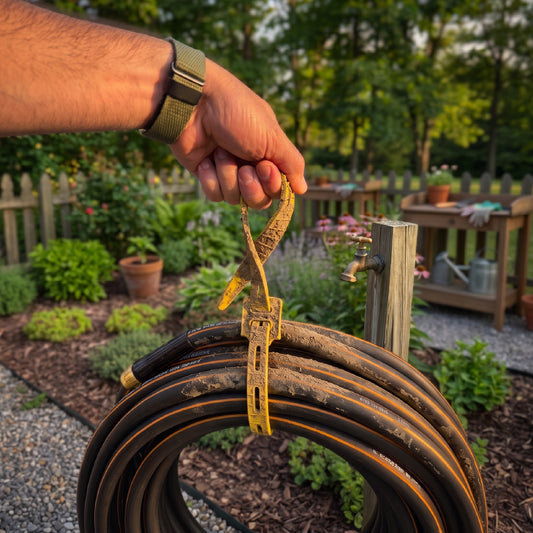
Cord-Tie is a durable, reusable, and versatile tool to bundle, manage, and hang cables and cords. It’s reusable unlike zip ties. It holds up to dirt, dust, fuzz, and weather unlike hook-and-loop straps. It protects cables unlike zip ties and tie-line which can inflict damage when cinched up too tight.
Ultimately, the best cable management tool is careful planning. By routing cleanly and minimizing excess slack, you can rely less on heavy-handed fasteners and let the cables lay naturally exactly where they belong. And grab some Cord-Ties.