From Chaos to Canvas: The Ultimate Guide to Reclaiming Your Garage
For many of us, the garage is the "black hole" of the home. It’s where half-finished DIY projects go to hibernate, where holiday decorations spend eleven months of the year, and where that box of "stuff" from three moves ago sits gathering dust. We tell ourselves we’ll get to it "next weekend," yet the car remains parked in the driveway because the lawnmower and a stack of old paint cans have claimed its spot.
Organizing a garage isn't just about tidying up; it’s about reclaiming valuable square footage and reducing the mental load of "clutter-creep." Whether you want a pristine workshop, a home gym, or simply a place to park your car without performing a Tetris-like maneuver, here is your step-by-step roadmap to garage glory.
Phase 1: The Great Purge
You cannot organize clutter. Before you buy a single plastic bin or pegboard, you have to face the mountain.
- The Empty-Out: If weather permits, pull everything out onto the driveway. Seeing the empty space helps you visualize the potential rather than just the mess.
- The Three-Pile Rule: Create designated zones for Keep, Donate/Sell, and Trash.
- The One-Year Test: If you haven’t used that rusted hedge trimmer or those leftover tiles from the 2018 kitchen remodel, it’s time to let them go.
- Safety First: Be responsible with "hazardous" waste. Old oil, pesticides, and half-empty spray paint cans shouldn't go in the regular trash. Check your local municipality for chemical disposal days.
Phase 2: Categorize and Conquer
Once you’ve whittled your belongings down to the essentials, group them like they’re in a department store. This prevents the "where is the screwdriver?" scavenger hunt.
|
Category |
Typical Items |
|---|---|
|
Sports & Rec |
Bikes, balls, camping gear, coolers |
|
Lawn & Garden |
Shovels, rakes, potting soil, hoses |
|
Workshop |
Power tools, nails, screws, workbench |
|
Seasonal |
Holiday lights, beach chairs, snow shovels |
|
Maintenance |
Car fluids, cleaning supplies, ladders |
Phase 3: Think Vertically (and Celestially)
The biggest mistake people make in a garage is leaving everything on the floor. In a garage, floor space is gold. To maximize your footprint, you need to look up.
1. Wall Systems
- Slatwall or Pegboards: These are the MVPs of garage organization. They allow you to hang everything from hammers to heavy-duty weed whackers. The beauty of these systems is their flexibility; as your hobby shifts from woodworking to cycling, you can just move the hooks.
- Track Systems: Heavy-duty tracks are perfect for long-handled tools like rakes and brooms, keeping them upright and out of corners.
2. Overhead Storage
The space above your head (and especially above the garage door) is often ignored.
- Ceiling Racks: Use these for lightweight, bulky items you only need once or twice a year, like holiday bins or camping gear.
- Pulley Systems: If you’re a cyclist or kayaker, a ceiling-mounted pulley can lift your ride out of the way, keeping your tires off the concrete and your floor clear.
3. Bundle and Hang Methods
Many garage items like cables, cords, hoses, and gear take up too much space. The best way to free up floor space is to bundle them up and hang.
- Rope: is an obvious choice. Rope can work, but it can be difficult to loosen and reuse.
- Hook-and-loop straps: Sold under a variety of brand names like Velcro, hook-and-loop straps are handy but they’re often ruined when exposed to dirt, dust, water, and weather.

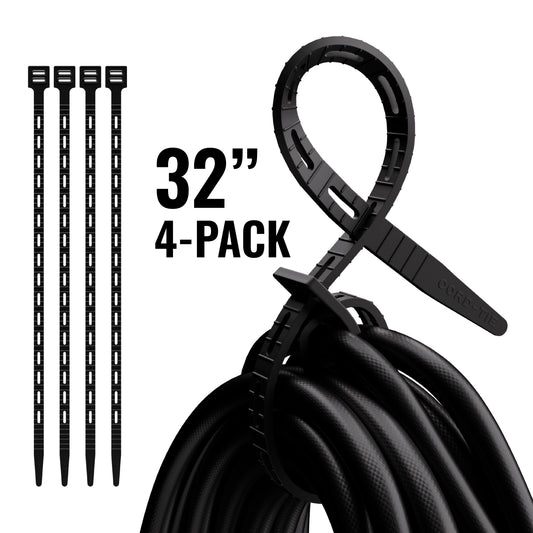
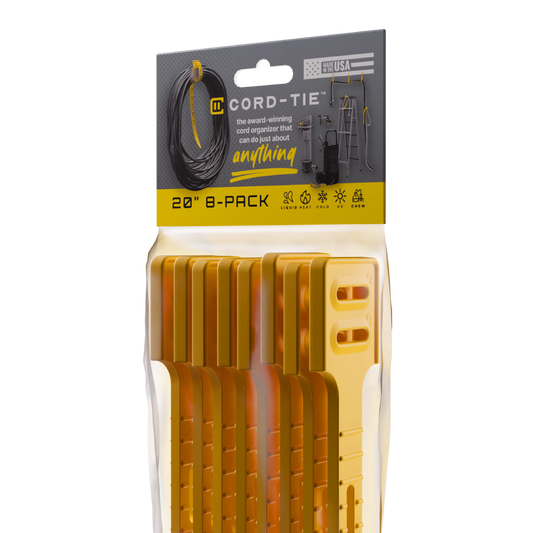
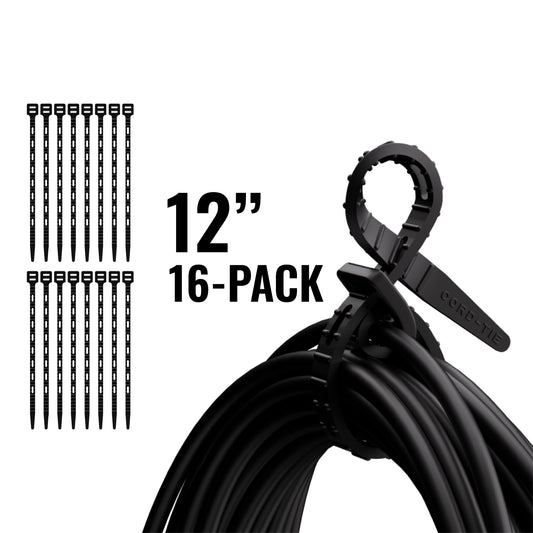
Cord-Tie: A new product, Cord-Tie is a durable, reusable, and versatile tool that allows you to easily bundle things together. With its patented design, Cord-Tie holds up to dirt, fuzz, and weather. And it has a built-in loop to enable you to hang things from cables, cords, hoses, gear, or lighting.
Phase 4: Choosing the Right Containers
Cardboard boxes are the enemy of a clean garage. They attract silverfish, absorb moisture, and eventually collapse. Invest in clear plastic bins with locking lids.
- Visibility: Clear bins allow you to see what’s inside without unstacking five boxes.
- Uniformity: Sticking to one or two sizes makes stacking much more stable and aesthetically pleasing.
- Label Everything: Don't trust your memory. Use a large-print label maker or a permanent marker on masking tape to label the front and side of every bin.
- Strength: Be sure to choose the correct weight capacity and durability to ensure stacked bins don’t crack under pressure.
Phase 5: The "Zones" Strategy
When putting things back, placement should be dictated by frequency of use.
- The "Go-Zone": Keep everyday items (recycling bins, dog leashes, frequently used sneakers) near the door to the house.
- The "Deep Storage": Keep the seasonal and rarely used items in the back corners or on the highest shelves.
- The "Danger Zone": Ensure chemicals, sharp tools, and heavy machinery are stored in locked cabinets or on high shelves if you have children or pets.
Maintenance: The Five-Minute Rule
The hardest part isn't getting organized; it’s staying organized. Set a rule: Never leave the garage without spending five minutes putting things back. If you used the drill, put it back on the pegboard. If you brought in the groceries, take the empty bags to the bin immediately.
A well-organized garage is more than just a storage unit; it’s a functional extension of your home. By clearing the floor and utilizing the walls, you’ll find that you haven't just gained a parking spot—you’ve gained peace of mind. Now, go grab those trash bags and get started!