Controlling the Chaos: Best Practices for Jobsite Cable and Hose Management
A construction site is a symphony of activity, but without proper management, it can quickly devolve into a chaotic, dangerous mess. Among the biggest culprits of jobsite clutter are cables, cords, and hoses. While essential for power and pneumatics, loose, tangled cables and hoses are not just an eyesore; they are a major safety hazard, creating tripping risks, electrical dangers, and shortening the life of expensive equipment.
Effective cable management is not just about housekeeping—it’s an investment in safety, efficiency, and professional pride. According to OSHA, maintaining a clean and orderly work area is required, with 1926.416(b)(2) specifically stating that walkways and working spaces must be kept clear of cords to prevent employee hazards.
Here is a guide to managing cables, cords, and hoses on the jobsite for a safer, more productive workflow.
1. Plan Before You Power
The best way to manage cords is to reduce the need for them. Before plugging in, plan your power tool usage to minimize long extension cord runs. Move work closer to outlets, or use cordless battery-powered tools whenever possible.
If you must run power, plan the path. Avoid running cables across high-traffic walkways, doorways, or areas prone to heavy vehicle traffic. If a cable must cross a walkway, plan for protection rather than just leaving it exposed.
2. Elevate and Suspend
The safest place for a cable is out of the way. Suspending cables and hoses overhead is an excellent way to keep the floor clear.
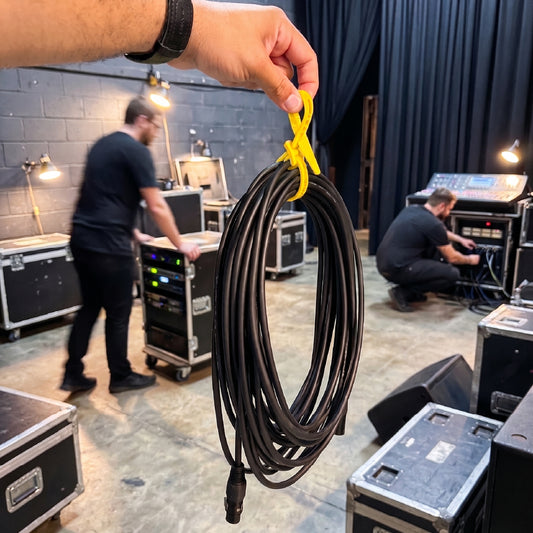
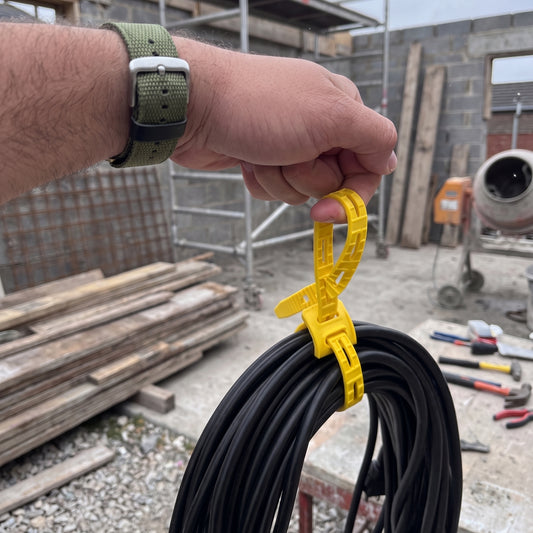
- Cord-Tie: Durable, reusable, and versatile, Cord-Tie is a tool for bundling and hanging cables, cords, and hoses.
- Cable Hangers/S-Hooks: Use specialized, reusable S-hooks or magnetic hangers to suspend cables from steel studs, joists, or scaffolding.
- J-Hooks: For long-term or temporary electrical installations, J-hooks provide a durable, organized way to run power and data cables overhead.
3. Cover and Protect
When cords cannot be elevated, they should be covered to prevent damage from heavy equipment, foot traffic, or materials handling.
- Rubber Cable Protectors: Durable, heavy-duty polyurethane cable protectors are ideal for high-traffic areas. They protect cables from crushing and prevent trip-and-fall accidents.
- High-Visibility Ramps: Use bright-colored (yellow or orange) cable protectors to increase visibility in dim or busy areas.
- Cable Path Tape: For temporary, low-traffic areas, heavy-duty, cable-rated tape can securely fasten cables to the floor.
4. Organize and Bundle
Tangled cables are time-wasters. Using efficient bundling techniques makes setup and teardown faster.
- Reusable Cable Cuffs and Ties: Replace one-time-use plastic zip ties with durable, reusable Cord-Ties. These allow for easy reconfigurations and minimize waste.
- Cord Reels and Caddies: Hose reels keep extension cords from tangling and make transport easier. A 20-in x 16-in cable caddy is excellent for storing and dispensing wire spools on-site.
- Color Coding: Use colored ties or electrical tape to differentiate between power cords, data cables, and hoses. This makes troubleshooting and cleanup much faster.
5. Inspect and Maintain
Cable management is not a "set it and forget it" task. As the jobsite changes, so do the risks.
- Regular Inspections: Schedule daily or weekly inspections to ensure cables are still properly managed, not frayed, and haven’t moved into traffic paths.
- Replace Damaged Cords: Never use a damaged cord. If a cable has nicks in the insulation, it should be removed from service immediately to avoid electrocution, or a fire.
- Use Strain Relief: Ensure cords passing through boxes or cabinets are protected with appropriate bushings to prevent strain.
6. Keep It Clean (Literally)
Housekeeping is part of the job. At the end of every shift, coil and secure unused cords. Don’t leave large loops on the floor. Proper management also extends to removing scrap and debris, which can tangle with cords and increase fire hazards.
The Bottom Line
Effective cable management, from implementing "engineering controls" like cable trays to daily housekeeping, protects both your crew and your bottom line. It reduces "cable chaos," lowers the risk of injury, and extends the lifespan of expensive tools. By treating cable management as an integral part of your safety protocol, you turn a chaotic jobsite into a professional, high-functioning environment.
Remember: A tidy jobsite is a safe, productive jobsite.